




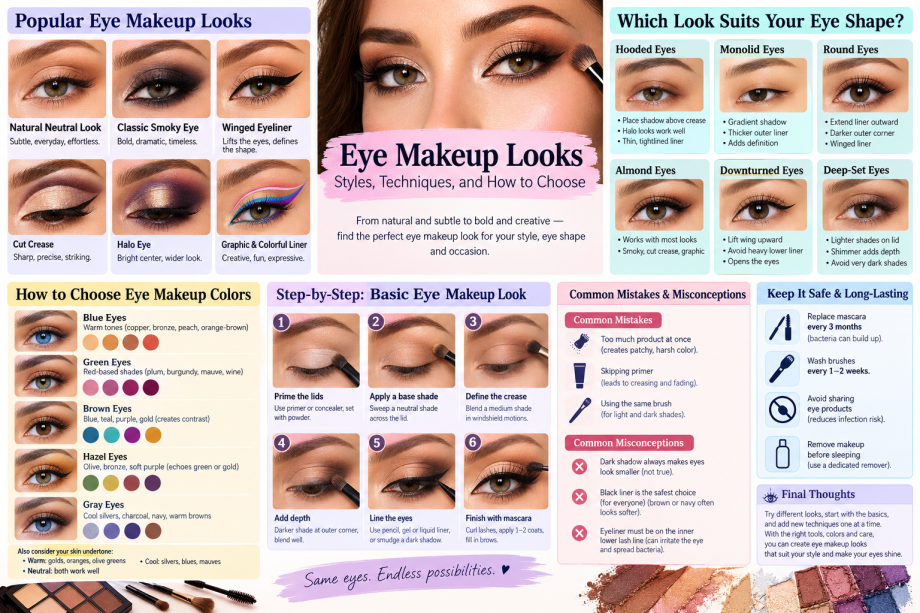
Eye makeup looks are combinations of eyeshadow, eyeliner, mascara, and brow products arranged to shape, define, or highlight the eyes. The most common include the natural neutral look, classic smoky eye, winged liner, cut crease, halo eye, and colorful graphic liner. Each one suits different occasions, eye shapes, and skill levels, and most can be adapted with small changes in color and intensity.
What Are the Most Popular Eye Makeup Looks?
The most popular eye makeup looks fall into six main categories, ranging from barely-there neutrals to bold, graphic designs. Knowing the differences helps you pick a style that fits your event, your features, and the time you have.
Natural Neutral Eye Look
A natural neutral look uses matte or soft-shimmer browns, tans, and beiges to add subtle depth without obvious color. It typically involves one light shade across the lid, a slightly deeper shade in the crease, a thin line of liner or shadow at the lash line, and mascara. It works well for daily wear, office settings, and interviews because it enhances the eyes without drawing attention to the makeup itself.
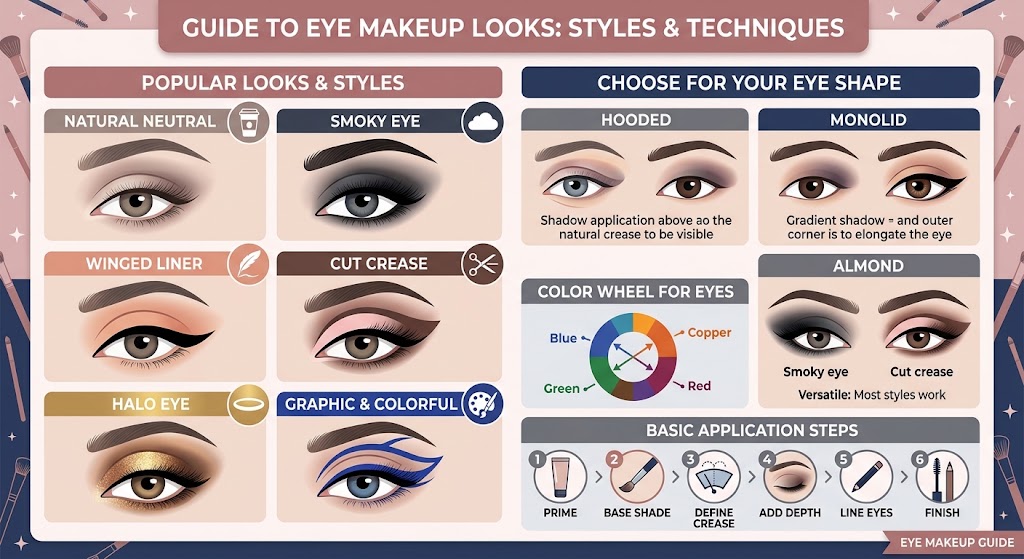
Classic Smoky Eye
A smoky eye is a gradient of dark shadow, usually black, charcoal, or deep brown, blended outward and upward so there are no hard edges. The darkest color sits at the lash line and fades into a lighter shade toward the brow bone. Despite the name, smoky eyes are not limited to black; bronze, plum, navy, and forest green versions are common and often more flattering in daylight.
Winged Eyeliner
Winged eyeliner is a line drawn along the upper lash line that extends past the outer corner of the eye in a flick. The wing can be short and subtle or long and dramatic, and it is usually angled toward the end of the eyebrow. It is one of the most recognizable styles because it lifts the outer corner and pairs with almost any other eye look.
Cut Crease
A cut crease creates a sharp, defined line between the eyelid and the crease, rather than blending the two together. The lid is typically filled with a bright, metallic, or light shade, while the crease area carries a darker color. Because it depends on precision, it is considered an intermediate to advanced technique.
Halo Eye
A halo eye places a light or shimmery shade in the center of the lid and surrounds it with darker shades on the inner and outer corners. The contrast makes the eyes look rounder and more open. It works especially well on hooded or smaller eyes, since the bright center draws attention to the lid.
Graphic and Colorful Liner
Graphic liner uses shapes, floating lines, double wings, or bold color instead of traditional black along the lash line. Popular choices include cobalt blue, emerald, white, and neon shades. These looks are often worn for festivals, photoshoots, and creative events, and they are the most forgiving of personal style because there are no strict rules for shape.
Which Eye Makeup Look Suits Your Eye Shape?
The best eye makeup look depends partly on eye shape, because placement of color can balance or emphasize natural features. These are general guidelines rather than fixed rules, and many people find that personal preference matters more than shape.
Hooded Eyes
Hooded eyes have a fold of skin that partly covers the crease. Placing shadow slightly above the natural crease, where it stays visible when the eyes are open, works better than drawing the crease in its natural spot. Halo looks and thin, tightlined eyeliner are common choices.
Monolid Eyes
Monolid eyes have little or no visible crease. Gradient shadow, where color is deepest at the lash line and fades upward, creates dimension without needing a crease. Liner drawn slightly thicker at the outer half can also add definition.
Round Eyes
Round eyes show more of the eyelid and often more white around the iris. Extending liner and darker shadow outward, rather than around the whole eye, creates a more elongated appearance. Winged liner is a popular option for this shape.
Almond Eyes
Almond eyes are often described as the most versatile shape because the outer corners tilt slightly upward and the proportions are balanced. Nearly every look works, including smoky, cut crease, and graphic liner.
Downturned and Deep-Set Eyes
Downturned eyes have outer corners that angle slightly down, while deep-set eyes sit further back in the socket. For downturned eyes, lifting the wing upward helps counter the angle. For deep-set eyes, lighter shades and shimmer on the lid bring the area forward, and very dark shades can make the eyes appear even smaller.
How Do You Choose Eye Makeup Colors?
Eye makeup colors are usually chosen to either complement or contrast with the natural eye color, and the choice affects how vivid the eyes appear. Complementary shades sit opposite the eye color on the color wheel, which tends to make the iris stand out.
- Blue eyes: Warm tones such as copper, bronze, peach, and orange-brown.
- Green eyes: Red-based shades such as plum, burgundy, mauve, and wine.
- Brown eyes: Nearly every color works, but blue, teal, purple, and gold create strong contrast.
- Hazel eyes: Shades that echo either the green or the gold flecks, such as olive, bronze, or soft purple.
- Gray eyes: Cool silvers, charcoal, navy, and warm browns, depending on whether you want to blend or contrast.
Skin undertone matters as well. Warm undertones often suit golds, oranges, and olive greens, while cool undertones usually suit silvers, blues, and mauves. Neutral undertones can wear both.
How Do You Create a Basic Eye Makeup Look Step by Step?
A basic eye makeup look can be created in six steps and takes about five to ten minutes once you are familiar with the process. The steps below produce a soft, blended everyday look that serves as the foundation for most other styles.
- Prime the lids. Apply a thin layer of eyeshadow primer or concealer and set it with a light dusting of powder. This helps shadow last longer and keeps color from creasing.
- Apply a base shade. Sweep a neutral shade close to your skin tone across the whole lid up to the brow bone to create an even canvas.
- Define the crease. Use a fluffy brush to blend a medium brown or taupe shade in windshield-wiper motions in the crease, starting at the outer corner.
- Add depth. Place a darker shade at the outer corner and blend it upward and inward until no harsh edges remain.
- Line the eyes. Draw a thin line along the upper lash line with pencil, gel, or liquid liner, or smudge a dark shadow along it for a softer finish.
- Finish with mascara. Curl the lashes first, then apply one or two coats of mascara from root to tip, and fill in the brows to frame the look.
What Are Common Mistakes and Misconceptions?
The most frequent eye makeup mistakes involve blending, product amount, and placement, and most can be fixed with small adjustments. Several popular beliefs about eye makeup are also not entirely accurate.
Common Mistakes
Applying too much shadow at once leads to patchy, harsh color, so building in thin layers is more reliable. Skipping primer is another cause of creasing and fading, especially on oily lids. Using the same brush for light and dark shades muddies the colors, which is why keeping a separate blending brush is helpful.
Common Misconceptions
One misconception is that dark shadow always makes eyes look smaller. Dark colors can shrink the look of deep-set eyes, but on many eye shapes, well-blended dark shades add definition. Another is that black liner is the safest choice for everyone; brown or navy liner often looks softer and more natural on lighter complexions and lighter eye colors. A third is that eyeliner must be applied to the inner lower lash line, when in fact doing so can irritate the eye and shift bacteria onto the eye surface. Many makeup artists and eye doctors recommend keeping liner on the outside edge of the lash line.
How Can You Keep Eye Makeup Safe and Long-Lasting?
Eye makeup stays on longer and stays safer when products are fresh, tools are clean, and application avoids the waterline. Mascara is generally recommended for replacement every three months, because bacteria can build up with repeated use. Brushes should be washed at least every one to two weeks, and sharing eye products with others is best avoided to reduce the risk of infection. Removing makeup before sleeping and using a dedicated eye makeup remover also helps protect the delicate skin around the eyes.
Conclusion
Eye makeup looks range from simple neutral washes to dramatic graphic liner, and the best choice depends on the occasion, eye shape, and color palette you prefer. Starting with the basic step-by-step look and adding one new technique at a time, such as a wing or a halo, is a reliable way to build skill. To keep learning, you may want to explore eyebrow shaping techniques or how to choose the right eyeliner type for your lid.
