




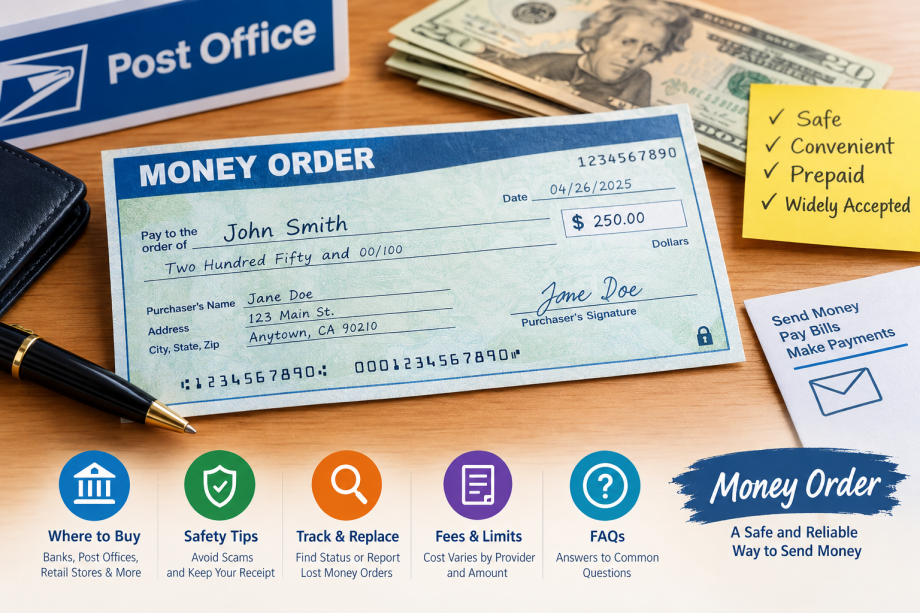
A money order is a prepaid paper payment that allows you to send money without using cash or writing a personal check. You purchase it from an authorized provider, pay the amount plus a small fee, and give the money order to the recipient or mail it to them. The recipient can generally cash or deposit it, depending on the provider’s rules. Money orders are commonly used when a guaranteed form of payment is required.
What Is a Money Order?
A money order is a payment document issued after you pay the amount in advance, so the recipient receives a payment that has already been funded.
Unlike a personal check, a money order is not normally drawn directly from your checking account. The provider receives your money first and then issues the payment document for the specified amount.
Money orders can be useful when someone does not have a bank account, does not want to send cash through the mail, or needs a payment method that does not expose their personal banking information.

How Does a Money Order Work?
A money order works by transferring prepaid funds from the purchaser to the recipient through an issuing organization.
The process generally follows these steps:
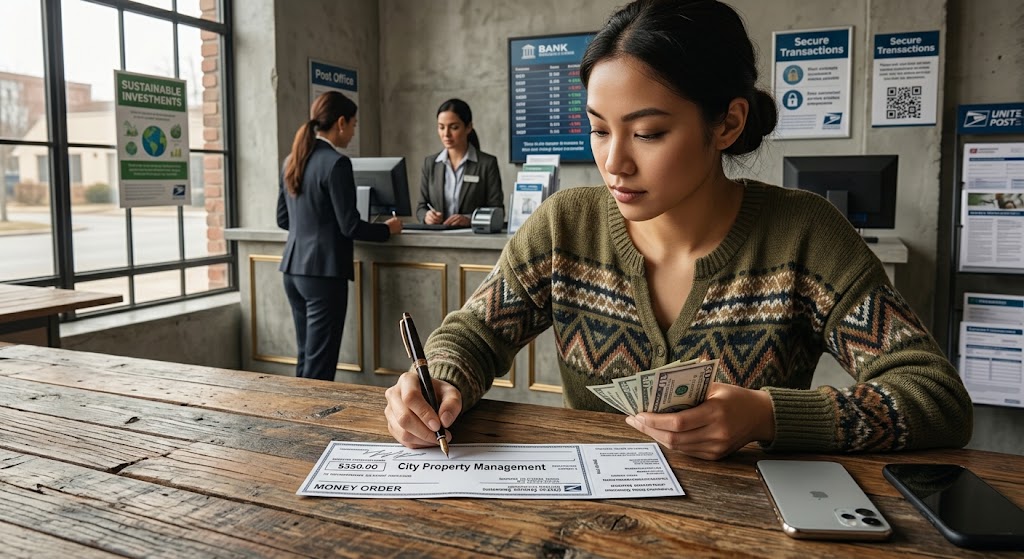
- Purchase the money order: Visit an authorized provider and pay the desired amount plus the applicable fee.
- Complete the recipient information: Write the name of the person or organization receiving the payment.
- Complete the purchaser information: Depending on the provider, you may need to provide your name or other details.
- Keep the receipt: The receipt contains important information that can help you track or replace the money order.
- Give or mail the money order: Send it to the recipient using an appropriate delivery method.
- Recipient cashes or deposits it: The recipient follows the issuing provider’s procedures to receive the funds.
Always fill out the recipient information carefully. An incorrectly written recipient name can make it difficult for the intended person to cash or deposit the payment.
Where Can You Buy a Money Order?
Money orders are available from various financial institutions and payment-service providers, although availability and limits differ by location.
Common places that may offer money orders include:
- Banks and credit unions
- Post offices
- Grocery stores
- Convenience stores
- Check-cashing and financial-service locations
- Retail locations that provide payment services
Before visiting a location, check whether it sells money orders, what identification is required, the maximum amount allowed, and what fees apply.
How Much Does a Money Order Cost?
The cost of a money order depends on the provider, amount, location, and applicable service fees.
The purchase price normally consists of the face value of the money order plus an issuance fee. For example, if you purchase a $200 money order and the provider charges a $2 fee, you would pay $202.
Some providers impose maximum amounts per money order. If you need to send a larger amount, you may have to purchase multiple money orders or use another payment method.
Money Order vs. Personal Check
A money order and a personal check both provide written payment instructions, but they are funded differently.
A personal check is connected to the writer’s bank account. When the recipient deposits or cashes the check, the payment depends on sufficient funds being available in that account.
A money order is prepaid. This means the purchaser has already provided the funds to the issuer when buying it, which can make money orders useful when a recipient does not want to accept a personal check.
Are Money Orders Safe?
Money orders can be a relatively secure alternative to carrying or mailing cash, but they are not completely free from risk.
The biggest practical concern is losing the document before it is cashed. A money order can also be stolen or altered, and fraudulent money orders can be used in scams.
For protection, keep your receipt, avoid leaving blank fields when completing the document, and use a reputable provider. If someone sends you a money order and asks you to send part of the money back, be particularly cautious because fake-payment scams commonly use this type of arrangement.
Can You Track a Money Order?
Many money-order providers offer tracking or status-checking services using information from the receipt.
The exact process depends on the issuer. You may need the money order number, purchase date, amount, or other information printed on the receipt.
For this reason, keeping the receipt is one of the most important steps after purchasing a money order. Without the receipt or identifying information, resolving a lost or disputed money order can become more difficult.
What Happens If a Money Order Is Lost?
If a money order is lost, contact the organization that issued it as soon as possible.
The issuer may require you to provide the money order number, receipt, identification, a claim form, or other documentation. Some providers charge a processing fee and may require a waiting period before replacing or refunding a lost money order.
Do not assume that a lost money order can immediately be replaced. The specific rules depend on the issuer and whether the document has already been cashed.
Can You Cancel a Money Order?
A money order may be cancelable or replaceable in certain circumstances, but the procedure varies by issuer.
If you change your mind before the recipient cashes it, contact the issuer and ask about its cancellation or refund process. You will generally need proof of purchase and identifying information from the original money order.
If the money order has already been cashed, recovering the funds may be considerably more complicated.
Can You Send a Money Order Through the Mail?
A money order can generally be mailed to a recipient, but you should consider the risks associated with sending any negotiable payment document through the mail.
Use an appropriate envelope and consider a mailing service that provides tracking or proof of delivery when the payment is important. Never send your money-order receipt separately from the document if you need it to support a future claim.
For larger or time-sensitive payments, compare the cost, speed, and protection offered by electronic payment methods.
What Information Goes on a Money Order?
The exact fields vary by issuer, but a money order commonly includes information such as:
- Recipient or payee name
- Purchase amount
- Purchaser information
- Issuer information
- Money order number
- Date or transaction information
- Receipt or tracking information
Read the instructions printed on the money order before completing it. Use accurate information and avoid giving the document to anyone who does not need to receive it.
Common Money Order Scams
Money orders can be involved in several types of financial fraud, particularly fake-payment schemes.
A common scam involves someone giving you a fraudulent money order for more than you are owed and asking you to send the difference back. Another involves a stranger claiming that you have won a prize or received an unexpected payment and asking you to pay a fee using a money order.
A money order should not automatically be considered proof that money is legitimate or immediately available. If a payment seems unusual, verify it independently with the issuing organization before sending money, goods, or personal information.
When Should You Use a Money Order?
A money order can be useful when you need a prepaid payment method and the recipient does not accept cash or personal checks.
It may make sense for situations such as paying a person or organization that specifically requests a money order, making certain bill or rent payments, or sending payment when you do not want to use a personal check.
However, fees, maximum amounts, processing times, and acceptance vary. Check the recipient’s requirements before purchasing one.
Frequently Asked Questions About Money Orders
Is a money order the same as cash?
No. A money order is a payment document purchased with funds in advance. It can be safer to handle than large amounts of cash, but it can still be lost, stolen, or used fraudulently.
Do you need a bank account to buy a money order?
Not necessarily. Many money-order providers allow customers to purchase them without having a bank account. The accepted payment methods and identification requirements depend on the provider.
Does a money order expire?
The answer depends on the issuer and the applicable rules. Some money orders can remain valid for a long time, while others may become subject to fees or special procedures after a certain period.
Can someone else cash my money order?
A money order is generally payable to the named recipient, subject to the issuer’s identification and payment rules. Signing or endorsing a money order incorrectly can create problems, so recipients should follow the issuer’s instructions.
What should I do after buying a money order?
Complete it accurately, keep the receipt, and deliver it securely to the intended recipient. The receipt is especially important if the money order is lost, stolen, or needs to be tracked.
Conclusion
A money order is a prepaid payment document that can provide an alternative to cash, personal checks, and some electronic payment methods. Understanding how money orders work, where to buy them, their fees, tracking procedures, and potential scams can help you use them safely. If you are comparing payment options, you may also want to learn about cashier’s checks, personal checks, and electronic money transfers.