



Finding a trustworthy dealer is one of the most important steps in building a successful business. Whether you are a first-time buyer, an entrepreneur searching for suppliers, or a company looking to expand its distribution network, choosing the right dealer source can make all the difference. A dependable partner provides quality products, competitive pricing, consistent inventory, and reliable customer support. On the other hand, working with an unreliable supplier can lead to delayed shipments, poor-quality products, unhappy customers, and financial losses.
The term GMF Dealer Source represents more than simply locating a seller. It refers to identifying dependable dealers, evaluating their credibility, building lasting relationships, and creating a supply chain that supports sustainable business growth. Think of it as building the foundation of a house. Without a strong foundation, even the most beautiful structure may struggle to stand over time.
This guide explains everything you need to know about selecting, evaluating, and working with dealer sources. Whether your goal is expanding your product catalog, improving customer satisfaction, or increasing profitability, these insights will help you make informed decisions.
Understanding GMF Dealer Source
What Does It Mean?
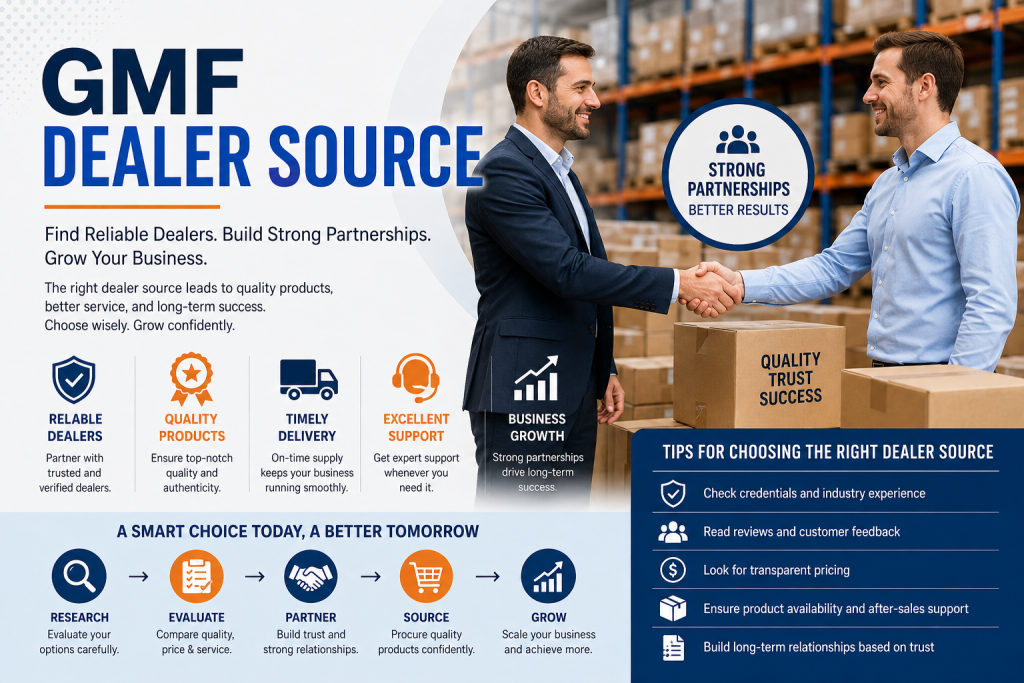
A dealer source is the place, organization, or network through which businesses obtain products, equipment, or services for resale or operational use. Depending on the industry, dealer sources may include manufacturers, authorized distributors, wholesalers, regional suppliers, or independent dealers.
Instead of focusing solely on price, successful businesses evaluate dealer sources based on reliability, product consistency, communication, and long-term value.
Why It Matters
Choosing the right dealer source directly impacts:
- Product quality
- Customer satisfaction
- Business reputation
- Inventory availability
- Profit margins
- Brand credibility
- Operational efficiency
When businesses work with dependable dealers, daily operations become smoother and customer confidence grows naturally.
The Importance of Choosing the Right Dealer
Every purchase influences your business reputation. Customers rarely know who supplied your products, but they always remember the quality they receive.
A reliable dealer provides consistency. Orders arrive on time, products meet expectations, and communication remains professional. These factors reduce stress while allowing business owners to focus on growth instead of solving avoidable problems.
Poor dealer selection often results in:
- Late deliveries
- Inventory shortages
- Product defects
- Warranty complications
- Increased operational costs
- Customer complaints
- Lost sales opportunities
The difference between business growth and business frustration often begins with selecting the right supplier.
Characteristics of a Reliable Dealer Source
Not every supplier deserves your trust. The best dealer sources share several important qualities.
Strong Industry Reputation
Reputable dealers usually have years of experience serving businesses successfully. Positive customer feedback and professional references demonstrate reliability.
Product Quality
High-quality products reduce returns, complaints, and warranty claims. Reliable dealers maintain strict quality standards throughout their inventory.
Transparent Pricing
Honest suppliers clearly explain pricing structures without hidden charges or unexpected fees.
Excellent Communication
Professional communication builds confidence. Reliable dealers answer questions promptly, provide updates, and resolve concerns efficiently.
Inventory Stability
Consistent product availability helps businesses meet customer demand without unnecessary delays.
Technical Support
Many dealer sources also provide installation guidance, troubleshooting assistance, warranty support, and product documentation.
These qualities create long-term partnerships rather than one-time transactions.
Benefits of Working with Trusted Dealer Sources
Choosing dependable suppliers creates advantages that extend far beyond purchasing products.
Improved Customer Satisfaction
Customers receive quality products consistently, increasing trust and encouraging repeat purchases.
Better Profitability
Reliable products reduce returns, repairs, and replacement costs while protecting profit margins.
Faster Business Growth
Business owners spend less time solving supplier-related issues and more time developing new opportunities.
Stronger Brand Image
Consistent quality strengthens customer confidence and improves brand reputation.
Long-Term Business Relationships
Successful dealer partnerships often evolve into strategic collaborations that benefit both parties.
Trust is difficult to build but easy to lose. Reliable dealer sources help businesses maintain that trust.
Different Types of Dealer Sources
Businesses can obtain products through several channels.
Manufacturers
Buying directly from manufacturers often provides competitive pricing and authentic products. However, minimum order requirements may be higher.
Authorized Distributors
Authorized distributors receive products directly from manufacturers and often provide warranty support and technical assistance.
Regional Suppliers
Regional suppliers offer localized inventory and faster shipping, making them ideal for businesses operating within specific geographic markets.
Wholesale Dealers
Wholesalers purchase products in bulk and sell them to retailers at competitive prices.
Independent Dealers
Independent dealers may specialize in specific product categories or niche markets, providing personalized customer service.
Each option offers unique advantages depending on business size, purchasing volume, and operational goals.
How to Evaluate Dealer Sources
Selecting a supplier should involve careful research rather than quick decisions.
Verify Business Credentials
Confirm business registration, licensing, certifications, and years of operation.
Review Customer Feedback
Customer reviews often reveal valuable insights regarding product quality, communication, and delivery performance.
Compare Product Selection
A broader product catalog simplifies purchasing while reducing the need for multiple suppliers.
Assess Delivery Performance
Reliable shipping schedules help businesses maintain inventory without interruptions.
Examine Return Policies
Clear return procedures demonstrate confidence in product quality and customer satisfaction.
Request Product Samples
Testing products before large purchases reduces risk and verifies quality standards.
Careful evaluation protects businesses from costly mistakes.
Building Long-Term Dealer Relationships
Successful partnerships depend on mutual trust and professional communication.
Businesses should:
- Pay invoices promptly.
- Communicate clearly.
- Share demand forecasts.
- Provide constructive feedback.
- Honor contractual agreements.
- Maintain regular contact.
Strong dealer relationships often lead to priority inventory, better pricing, exclusive opportunities, and improved customer support.
Like tending a garden, relationships flourish when consistently cared for.
Technology and Modern Dealer Networks
Technology has transformed how businesses discover and manage dealer sources.
Digital platforms now simplify supplier research through:
- Online product catalogs
- Digital ordering systems
- Inventory tracking
- Customer portals
- Shipment monitoring
- Electronic invoices
- Secure payment processing
These tools reduce paperwork while improving operational efficiency.
Businesses can compare suppliers more quickly than ever before, making informed decisions using real-time information.
Common Challenges When Selecting Dealer Sources
Even experienced businesses encounter obstacles.
Price Isn’t Everything
The lowest price does not always provide the best value. Cheap products may create higher long-term costs through returns, repairs, or dissatisfied customers.
Communication Gaps
Poor communication frequently leads to misunderstandings regarding delivery schedules, product specifications, or pricing.
Inventory Fluctuations
Demand changes can affect product availability, making inventory planning increasingly important.
Counterfeit Products
Businesses should always verify product authenticity before placing substantial orders.
Limited Support
Some suppliers disappear after completing the sale. Reliable dealer sources continue supporting customers throughout the product lifecycle.
Recognizing these challenges helps businesses prepare effective solutions before problems arise.
Best Practices for Finding Reliable Dealer Sources
Businesses should approach supplier selection strategically.
Define Your Requirements
Identify product specifications, purchasing volume, delivery expectations, and support requirements before contacting suppliers.
Compare Multiple Options
Evaluating several dealer sources provides a clearer understanding of pricing, quality, and service differences.
Request References
Professional references offer valuable insight into a dealer’s reliability and customer satisfaction.
Start Small
Beginning with smaller orders allows businesses to evaluate supplier performance before making larger commitments.
Monitor Performance
Track delivery accuracy, communication quality, product consistency, and customer feedback regularly.
Continuous evaluation helps maintain high standards throughout the partnership.
Future Trends in Dealer Sourcing
Dealer networks continue evolving alongside advances in technology and changing customer expectations.
Several trends are shaping the future:
Digital Integration
Online ordering platforms continue simplifying procurement and inventory management.
Artificial Intelligence
Predictive analytics helps businesses forecast demand and optimize purchasing decisions.
Automation
Automated inventory systems reduce human error while improving operational efficiency.
Supply Chain Transparency
Businesses increasingly expect visibility into manufacturing, shipping, and inventory status.
Sustainability
Many organizations now prefer environmentally responsible suppliers who prioritize ethical manufacturing practices.
Data-Driven Decisions
Business intelligence tools enable companies to evaluate supplier performance using measurable metrics rather than assumptions.
Companies that embrace these developments will likely gain competitive advantages in efficiency and customer satisfaction.
Tips for Small Businesses
Smaller businesses often have limited purchasing power, but that doesn’t prevent them from building excellent supplier relationships.
Practical strategies include:
- Develop trust before negotiating discounts.
- Maintain consistent communication.
- Place regular orders whenever possible.
- Pay invoices promptly.
- Focus on long-term cooperation instead of short-term savings.
- Diversify suppliers to reduce risk.
- Keep detailed purchasing records.
Strong relationships often create opportunities that pricing alone cannot achieve.
Mistakes to Avoid
Many businesses unknowingly create unnecessary challenges when selecting dealer sources.
Avoid these common mistakes:
- Choosing suppliers based only on price.
- Ignoring customer reviews.
- Failing to verify certifications.
- Skipping product testing.
- Overlooking warranty terms.
- Depending entirely on one supplier.
- Neglecting written agreements.
- Ignoring communication quality.
- Rushing purchasing decisions.
Learning from these mistakes can save both time and money while protecting your business reputation.
Conclusion
Choosing the right GMF dealer source is not simply about purchasing products—it is about building a reliable partnership that supports long-term success. Every business depends on dependable suppliers to maintain quality, satisfy customers, and achieve sustainable growth. Careful research, clear communication, and ongoing performance evaluation help businesses identify partners they can trust.
Successful dealer relationships are built gradually through honesty, consistency, and mutual respect. By focusing on reliability, product quality, customer service, and long-term value instead of short-term savings, businesses position themselves for lasting success in an increasingly competitive marketplace.
Whether you are launching a new venture or expanding an established company, investing time in selecting the right dealer source today can create opportunities that continue delivering value for years to come.
Frequently Asked Questions
1. What is a GMF dealer source?
A GMF dealer source refers to a reliable supplier, distributor, wholesaler, or dealer network that provides products or services for businesses seeking dependable purchasing and long-term partnerships.
2. Why is choosing the right dealer source important?
The right dealer source improves product quality, customer satisfaction, inventory management, business reputation, and overall profitability while reducing operational risks.
3. How can I verify whether a dealer is trustworthy?
Research the dealer’s reputation, verify business credentials, review customer feedback, request references, test product samples, and evaluate communication before making significant purchases.
4. What qualities should I look for in a reliable dealer?
Look for consistent product quality, transparent pricing, professional communication, dependable delivery schedules, strong customer support, flexible return policies, and a proven industry reputation.
5. How can businesses build successful long-term dealer relationships?
Businesses can strengthen dealer relationships by communicating openly, paying invoices on time, providing accurate forecasts, honoring agreements, monitoring performance regularly, and treating suppliers as valued business partners rather than simply vendors.