




Rio Ferdinand is a former English professional footballer who became one of the defining centre-backs of the Premier League era. Best known for his long Manchester United career, Ferdinand combined defensive intelligence, pace and composure on the ball with the ability to build attacks from the back.
Born on 7 November 1978 in Camberwell, London, Rio Ferdinand developed through the youth system at West Ham United before becoming a first-team player as a teenager. His career eventually took him to Leeds United, Manchester United and Queens Park Rangers, while his England career produced 81 senior international appearances.
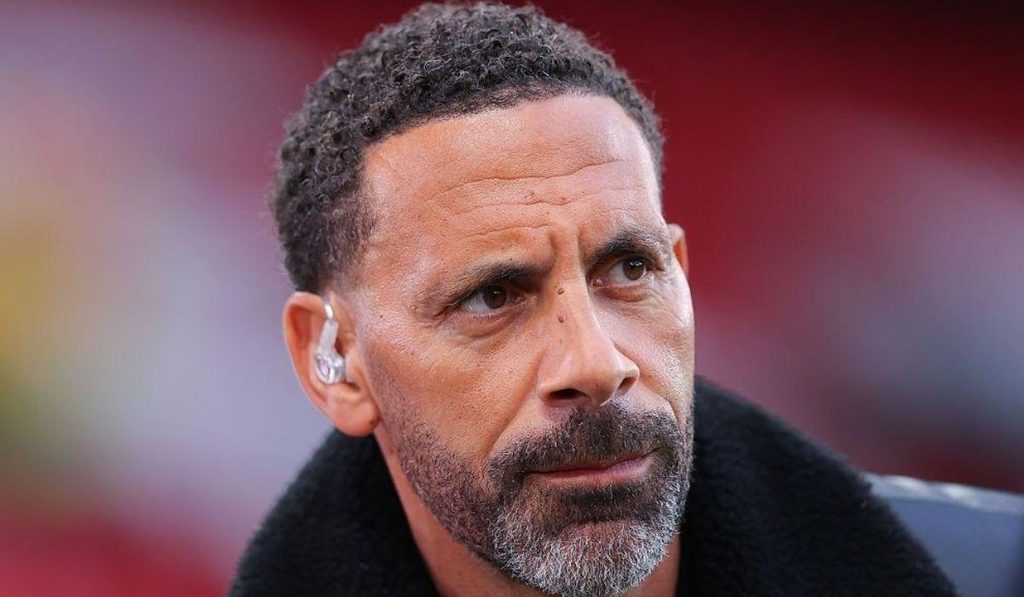
Who Is Rio Ferdinand?
Rio Ferdinand is a retired English footballer who played primarily as a centre-back. He is particularly associated with Manchester United, where he spent 12 seasons and won six Premier League titles.
Unlike the stereotypical central defender who concentrated almost exclusively on tackling and clearing the ball, Ferdinand was comfortable in possession. He could carry the ball into midfield, play accurate passes and use his pace to recover when opponents broke forward.
That combination helped make him an important part of Manchester United’s defensive structure during the Sir Alex Ferguson era.
The Premier League inducted Ferdinand into its Hall of Fame in 2023, recognising a career that included 504 Premier League appearances, 11 goals, eight assists and 189 clean sheets.
Rio Ferdinand’s Early Career at West Ham United
Ferdinand joined West Ham United as a young player and progressed through the club’s youth system. He made his senior debut at 17, beginning a professional career that would eventually span four Premier League clubs.
His early performances attracted attention because of his unusual combination of size, speed and technical ability. He was not simply a defender who reacted to danger; he could anticipate situations and help his team retain possession.
Ferdinand’s development at West Ham also brought international recognition. He represented England at youth level before making his senior debut against Cameroon in November 1997.
Why Did Rio Ferdinand Join Leeds United?
Leeds United signed Ferdinand in 2000 after his performances at West Ham established him as one of England’s most promising defenders. The transfer fee made him the world’s most expensive defender at the time.
His two seasons at Leeds were important because they exposed him to European football and increased responsibility. He eventually became club captain and continued to attract interest from major European clubs.
Manchester United ultimately made their move in 2002.
Rio Ferdinand at Manchester United
Manchester United signed Rio Ferdinand in 2002 for a then British-record fee for a defender. The move placed him at the centre of one of the most successful football teams of the period.
He won his first Premier League title with United in the 2002–03 season. More championships followed, including three consecutive league titles from 2006–07 through 2008–09 and another in 2012–13. The Premier League lists six league titles among his career achievements.
The 2007–08 season stands out particularly strongly. Manchester United won the Premier League and UEFA Champions League, with Ferdinand playing a major role in a defence that helped the club reach the top of European football.
United also won the FIFA Club World Cup in December 2008. Ferdinand captained the side during the final against LDU Quito, which United won 1–0.
Rio Ferdinand’s Playing Style
What made Rio Ferdinand different?
His defending was based on more than physical challenges. He was known for reading the game, positioning himself intelligently and using his pace to deal with attacking players.
His technical ability was equally important. Ferdinand could receive the ball under pressure and start an attack rather than simply clearing possession.
This became increasingly valuable as top-level football placed greater emphasis on defenders being comfortable with the ball. The Premier League has described him as a composed and stylish defender and highlighted his status as a leading ball-playing central defender.
In simple terms, Ferdinand often treated defending like solving a problem before it became an emergency: positioning and anticipation could remove danger before a tackle was necessary.
Rio Ferdinand England Career
Ferdinand represented England from 1997 to 2011. He earned 81 senior caps and scored three international goals.
He was selected for three FIFA World Cup squads and appeared in major international competitions during an important period for English football.
His first England goal came against Denmark during the 2002 World Cup. He also captained England, including during a friendly against France in 2008.
Ferdinand’s international career was sometimes interrupted by injuries and selection circumstances, but his overall record confirms his importance to the national team across more than a decade.
How Many Premier League Appearances Did Rio Ferdinand Make?
Rio Ferdinand made 504 Premier League appearances across 20 seasons. The Premier League identifies that figure as the second-highest total among central defenders. He also recorded 189 clean sheets.
His career statistics include:
- Premier League appearances: 504
- Premier League goals: 11
- Premier League assists: 8
- Premier League clean sheets: 189
- Premier League titles: 6
- England caps: 81
- England goals: 3
His wider club career included more than 500 senior appearances, with Manchester United accounting for the largest part of his top-level career.
How Many Trophies Did Rio Ferdinand Win?
Ferdinand’s Manchester United trophy collection included six Premier League titles and the 2007–08 UEFA Champions League. He was also part of United’s 2008 FIFA Club World Cup-winning team.
The league titles came in:
- 2002–03
- 2006–07
- 2007–08
- 2008–09
- 2010–11
- 2012–13
The 2012–13 title was particularly significant because it was Sir Alex Ferguson’s final Premier League championship as Manchester United manager.
Rio Ferdinand After Manchester United
Ferdinand left Manchester United in 2014 after 12 seasons at Old Trafford. He subsequently joined Queens Park Rangers for the 2014–15 campaign.
That season became his final professional playing chapter. On 30 May 2015, Ferdinand announced his retirement from professional football.
His next career direction moved toward broadcasting and football analysis. His experience as an elite defender gave him a natural perspective for explaining defensive organisation, tactical decisions and player performances to television audiences.
He has subsequently remained involved in football media and other football-related projects.
Is Rio Ferdinand in the Premier League Hall of Fame?
Yes. Rio Ferdinand was inducted into the Premier League Hall of Fame in 2023.
The Hall of Fame recognises players who made an exceptional contribution to the competition. Ferdinand’s selection was supported by his 504 Premier League appearances, 189 clean sheets and six league championships.
His induction also reflects how his position evolved during his career. Ferdinand helped demonstrate that an elite centre-back could be both a defensive specialist and an effective first phase of attack.
Rio Ferdinand and London Football Culture
Ferdinand’s connection with London began long before his Manchester United success. He was born in south London and developed professionally at West Ham United, making London an important part of his football story.
For football fans visiting London in 2026, his early career can be placed within a wider football itinerary. West Ham’s current home is London Stadium, while several historic London football grounds and museums provide context for the city’s football culture.
The summer of 2026 is also particularly active for visitors. London’s August calendar includes the Notting Hill Carnival from 29–31 August, All Points East at Victoria Park and continuing BBC Proms performances.
Visitors combining football history with sightseeing can also explore the British Museum, Shakespeare’s Globe and the Thames. The British Museum is free for its permanent collection and has a late opening on Fridays, while Shakespeare’s Globe is located on the South Bank near Blackfriars and Mansion House stations.
For practical planning, central London attractions are generally easier to reach by Underground or rail than by car. Visitors driving into central areas should check parking restrictions and congestion-related charges before travelling, then consider leaving the vehicle at an outer transport hub and continuing by public transport.
London in Summer 2026: Football and Things to Do
A football-focused London trip does not have to revolve around a match. The summer 2026 calendar provides several options for combining sport, culture and entertainment.
Wimbledon ran from 29 June to 12 July, while the Hundred cricket competition was scheduled at Lord’s and The Kia Oval from 21 July to 16 August. Formula E also reached its 2026 conclusion at ExCeL London on 15–16 August.
For visitors arriving in late August, the August Bank Holiday weekend runs from 28–31 August, with Notting Hill Carnival and major music events among the headline attractions.
The practical lesson is simple: popular London events can affect transport, hotel availability and journey times. Booking attractions ahead of time and checking the event-day travel information before leaving your hotel can make a significant difference.
Rio Ferdinand’s Legacy
Rio Ferdinand’s legacy is not based on one trophy or one famous match. It comes from consistency across a long career.
He played 504 Premier League matches, won six league titles, lifted the Champions League and represented England 81 times. His defensive intelligence and ability to play from the back helped establish a model for the modern centre-back.
His journey from a London teenager at West Ham to a Premier League Hall of Fame defender at Manchester United remains one of the more notable careers in English football.
For Manchester United supporters, Ferdinand is remembered as part of a highly successful defensive generation. For England supporters, he remains one of the country’s most experienced defenders of the modern era. And for younger players, his career offers a useful example of how technical ability can be just as important to a defender as tackling and physical strength.